Boris Johnson AIM Summit: Leadership Insights, Global Shifts, and Middle East Dynamics
Boris Johnson AIM Summit Insights: Global Shifts
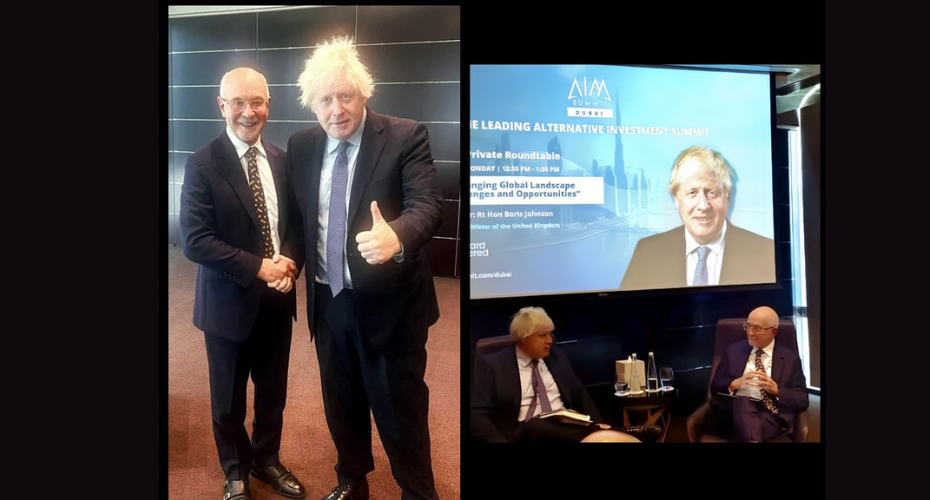
The global geopolitical landscape is undergoing rapid transformation, shaped by shifting alliances, economic volatility, and growing regional tensions. At the recent AIM Summit, the Boris Johnson AIM Summit session emerged as one of the most influential discussions, bringing together policymakers, economists, and international business leaders to examine global realignment. The Boris Johnson Global shifts roundtable discussion offered an in-depth assessment of how countries can adapt to accelerating geopolitical uncertainty, while also highlighting the importance of resilient leadership in an era of economic fragmentation. Joined by Gulf Analytica’s David Gibson-Moore, the Boris Johnson and David Gibson-Moore roundtable created a compelling dialogue that connected historical perspectives, present-day policy challenges, and future strategic priorities. Together, their insights underscored the urgent need for cooperation, innovation, and strategic diplomacy.
A central focus of the discussion was the ongoing instability in the Middle East and its implications on global security and economic performance. David Gibson-Moore on Middle East crisis provided an analytical overview of regional challenges, emphasizing the importance of diplomatic engagement and sustainable policy frameworks. His contribution helped situate the Middle East within the broader context of global shifts, illustrating how regional crises can affect energy markets, investment flows, and geopolitical alliances. This balanced analysis offered participants a deeper understanding of how economic powers must recalibrate their strategies in response to evolving Middle Eastern dynamics.
The session titled Navigating global challenges with Boris Johnson addressed the multifaceted pressures affecting governments and international institutions today. From disruptions in trade relations to the fragility of global supply chains, Johnson emphasized how nations must rethink long-standing approaches to economic growth and geopolitical influence. He noted that rising multipolarity, the emergence of new economic blocs, and the acceleration of technological competition are reshaping global priorities. Johnson’s viewpoint reinforced that leadership must evolve alongside global changes, adopting a more strategic and collaborative mindset.
One of the key takeaways from Boris Johnson roundtable was his strong emphasis on resilience and adaptability. Johnson discussed how countries can harness strategic partnerships, modernize governance structures, and invest in innovation to maintain competitive advantage. He stressed that successful leadership in today’s climate requires clarity, agility, and long-term strategic planning. His message resonated strongly with attendees, especially as traditional power structures continue to shift.
Meanwhile, the session also highlighted the David Gibson-Moore AIM Summit leadership insights, which brought a sophisticated economic lens to the discussion. Gibson-Moore examined investment flows across Europe, the Gulf region, and Asia, emphasizing how political instability and economic fragmentation require more robust decision-making. His approach connected financial realities with geopolitical dynamics, positioning effective leadership as essential for mitigating risk and fostering sustainable growth. Gibson-Moore’s commentary demonstrated his deep expertise in global markets and governance, reinforcing the need for evidence-based, forward-looking strategies.
A significant theme emerging from the dialogue was David Gibson-Moore’s perspective on global shifts, which explored how changing economic power centers, demographic transitions, and technological advancements are influencing long-term global development. He emphasized that emerging economies are becoming central players in global decision-making, and that developed nations must adjust their policies to accommodate shifting economic influence.
The summit also showcased Boris Johnson insights on global shifts, which highlighted the need for nations to maintain strategic flexibility amidst evolving challenges. Johnson discussed the significance of energy security, technological leadership, and international cooperation in ensuring economic stability. His analysis provided a wider lens through which to interpret global transitions, reinforcing that strategic foresight and diplomatic engagement are fundamental for long-term success.
For participants seeking a clearer understanding of geopolitics and future economic direction, the Boris Johnson global leadership insights were particularly impactful. Johnson highlighted the complexities of modern governance and the importance of maintaining strong alliances while adapting to global uncertainties. He emphasized that the next decade will require more proactive decision-making, greater investment in innovation, and stronger relations with emerging economic powers.
The combined expertise of Boris Johnson and David Gibson-Moore provided attendees with a structured understanding of how to navigate global shifts effectively. As geopolitical tensions rise, global markets fluctuate, and new technological disruptions emerge, their perspectives delivered a roadmap for policymakers, investors, and global institutions seeking stability and growth in an unpredictable world.
FAQs
- What were the main themes discussed in the Boris Johnson AIM Summit session?
The main themes included geopolitical realignment, global economic uncertainty, energy security, diplomatic strategy, and the evolving influence of emerging markets. The Boris Johnson AIM Summit session addressed how nations can adapt to accelerating global shifts, strengthen governance, and build resilient economic frameworks. These themes offered a comprehensive perspective on navigating future geopolitical and economic challenges. - Why was the Boris Johnson Global shifts roundtable discussion significant?
The Boris Johnson Global shifts roundtable discussion was significant because it addressed the most pressing geopolitical and economic transitions shaping international relations. Johnson highlighted multipolarity, global competition, modern governance, and the influence of technological transformation. His insights provided strategic direction for governments and businesses adapting to major structural changes worldwide. - What did David Gibson-Moore highlight about the Middle East crisis?
During the discussion, David Gibson-Moore on Middle East crisis emphasized the importance of diplomatic engagement, economic diversification, and regional stability. He discussed how Middle Eastern developments impact global energy markets, foreign investment, and international security. His insights helped attendees understand how regional crises connect with broader geopolitical and economic outcomes. - What were the key takeaways from Boris Johnson’s roundtable?
The key takeaways from Boris Johnson roundtable included the importance of strategic leadership, adaptability, energy security, and global collaboration. Johnson stressed that governments must modernize institutions, strengthen policy frameworks, and adopt long-term economic strategies to navigate rising global challenges effectively. - How did David Gibson-Moore contribute to leadership insights at AIM Summit?
David Gibson-Moore AIM Summit leadership insights focused on strategic decision-making, risk management, and global economic transitions. He emphasized how geopolitical uncertainty requires stronger governance, diversified investment strategies, and evidence-based policymaking. His insights provided a valuable framework for leaders navigating a changing economic landscape.
.jpg)
.jpg)

Comments
Post a Comment